Namibia is one of the most sparsely populated countries on earth, one of the least visited significant
safari destinations in Africa, and one of the most extraordinary places any traveller is likely to encounter in a lifetime of going to remarkable places. Which puts it firmly atop most serious African safari bucket lists.
This stunning country rewards the traveller who comes without a rigid plan and with a genuine appetite for the unexpected thanks to its enormous distances and startling contrasts. It's where the world's oldest desert meets the cold Atlantic, where desert-adapted elephant drink from rocky riverbeds in landscapes that look like the surface of Mars, and where the sky at night, uncontaminated by light pollution across vast stretches of the interior, is so dense with stars that it stops conversation entirely.
Welcome, then, to our guide to its essential experiences, offered in the spirit of people who believe that knowing where to look makes all the difference...
Sossusvlei and the Namib: the oldest desert on earth
The Namib Desert is somewhere between 55 and 80-million years old, which makes it the oldest desert on the planet, and the dunes of Sossusvlei, rising to heights of more than 300m in the southern Namib, are among the most photographed landscapes in Africa for reasons that become self-evident the moment you see them in the early morning light.
The particular red of the sand, oxidised iron deepening over millennia from yellow to orange to the extraordinary burnt sienna that greets you at dawn, changes hour by hour as the sun moves, and the shadows that fall across the dune faces have an almost architectural quality, sharp and precise and constantly shifting.
Climbing Dune 45 at sunrise, in the cool of the early morning enveloped by absolute silence, is one of those experiences that earns its reputation entirely. Deadvlei's dessicated acacia trees that stand out against the white clay pan and the red dunes behind them, have been there for approximately 900 years, killed when the water source shifted and preserved by a climate too dry to allow them to decompose. They are surreal and beautiful and unlike anything else on earth, and they have a way of making the traveller feel very small and very fortunate simultaneously.
Etosha: the great white place
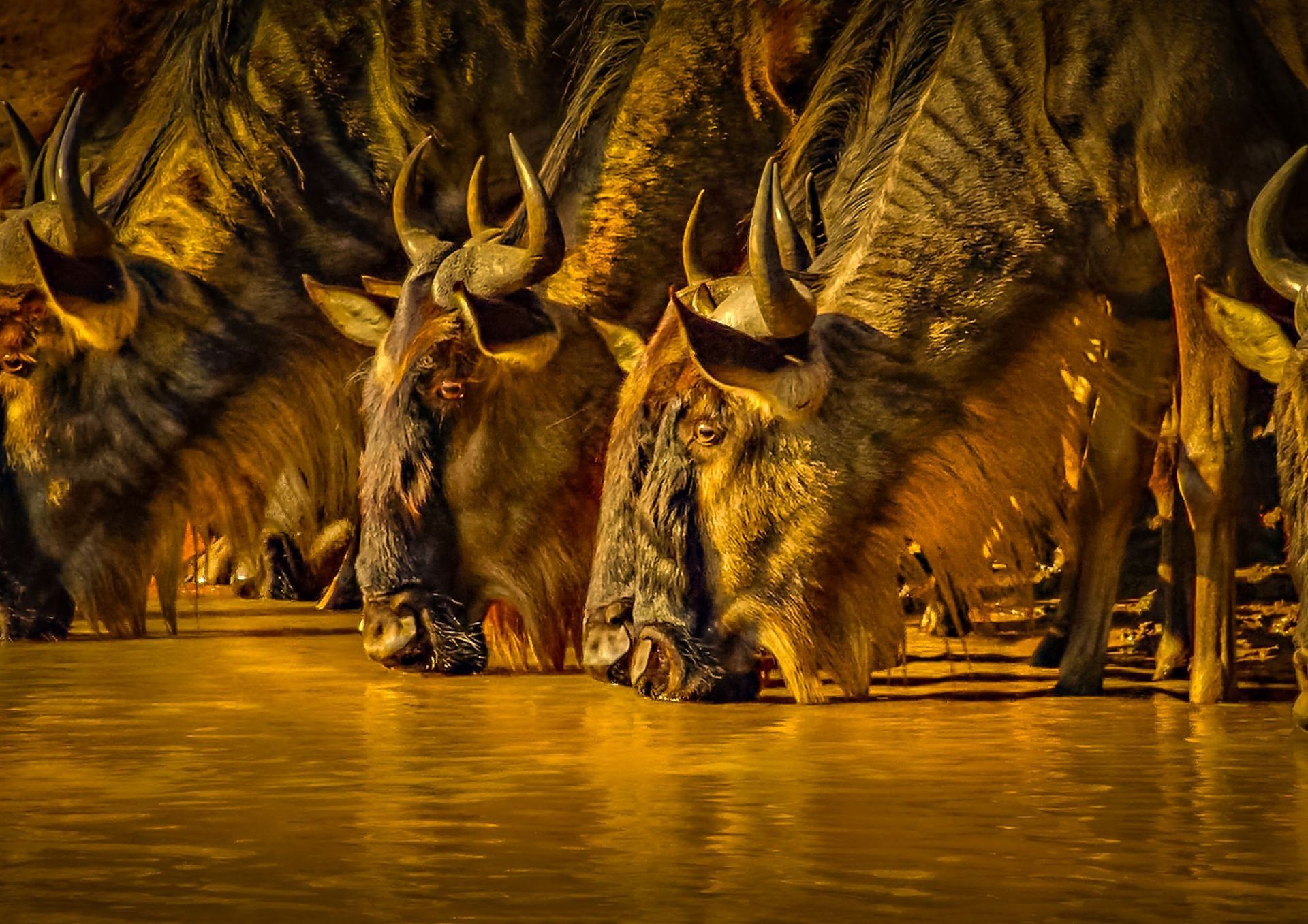
Etosha National Park takes its name from the vast salt pan at its heart, a blinding white expanse covering more than 4,700 square kilometres that was, in wetter geological times, a vast inland lake. The pan is largely lifeless, but its edges and the bush surrounding it support wildlife in remarkable concentrations, drawn to the permanent waterholes that dot the park and that, particularly in the dry season, become the stage for game viewing of extraordinary density and drama. Lion, leopard, cheetah, elephant, black and white rhino, giraffe, zebra, wildebeest, springbok and black-faced impala that occur nowhere else on earth all drink at Etosha's waterholes, sometimes simultaneously, in combinations that produce sightings of a kind that few other parks in Africa can match.
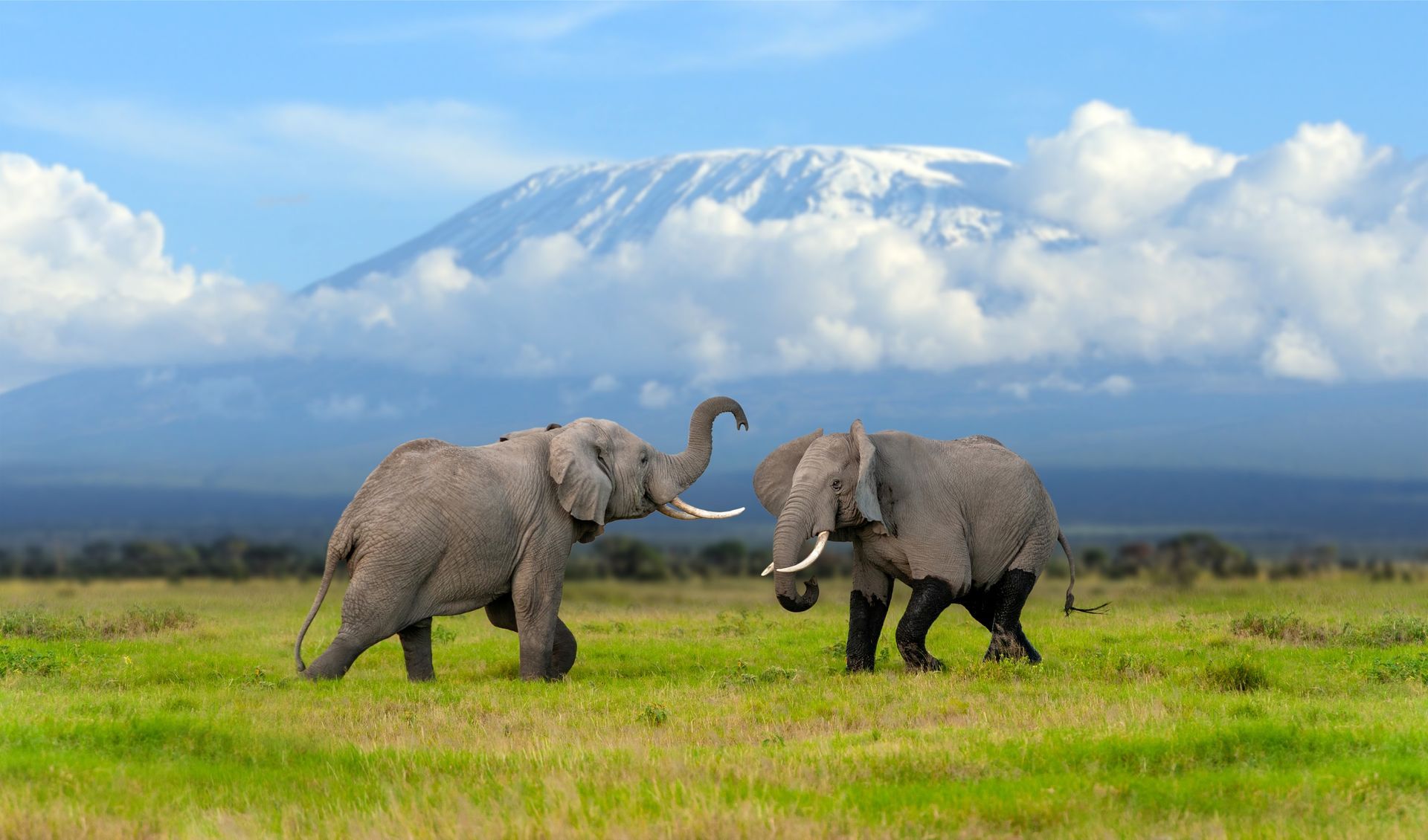
What makes Etosha particularly special, beyond the density of the game viewing, is the elephant. Etosha's elephant are the great grey ghosts of the park, their skin whitened by the calcium-rich dust of the pan until they look like creatures from another age entirely, which in a sense they are. Watching large bulls move into a waterhole at dusk, their pale flanks catching the last of the light, drinking with the unhurried authority of an animal that has been coming to this exact spot for 40 years, is one of those sightings that lodges itself somewhere permanent in the memory and refuses to leave.
Damaraland: old rock, older silence
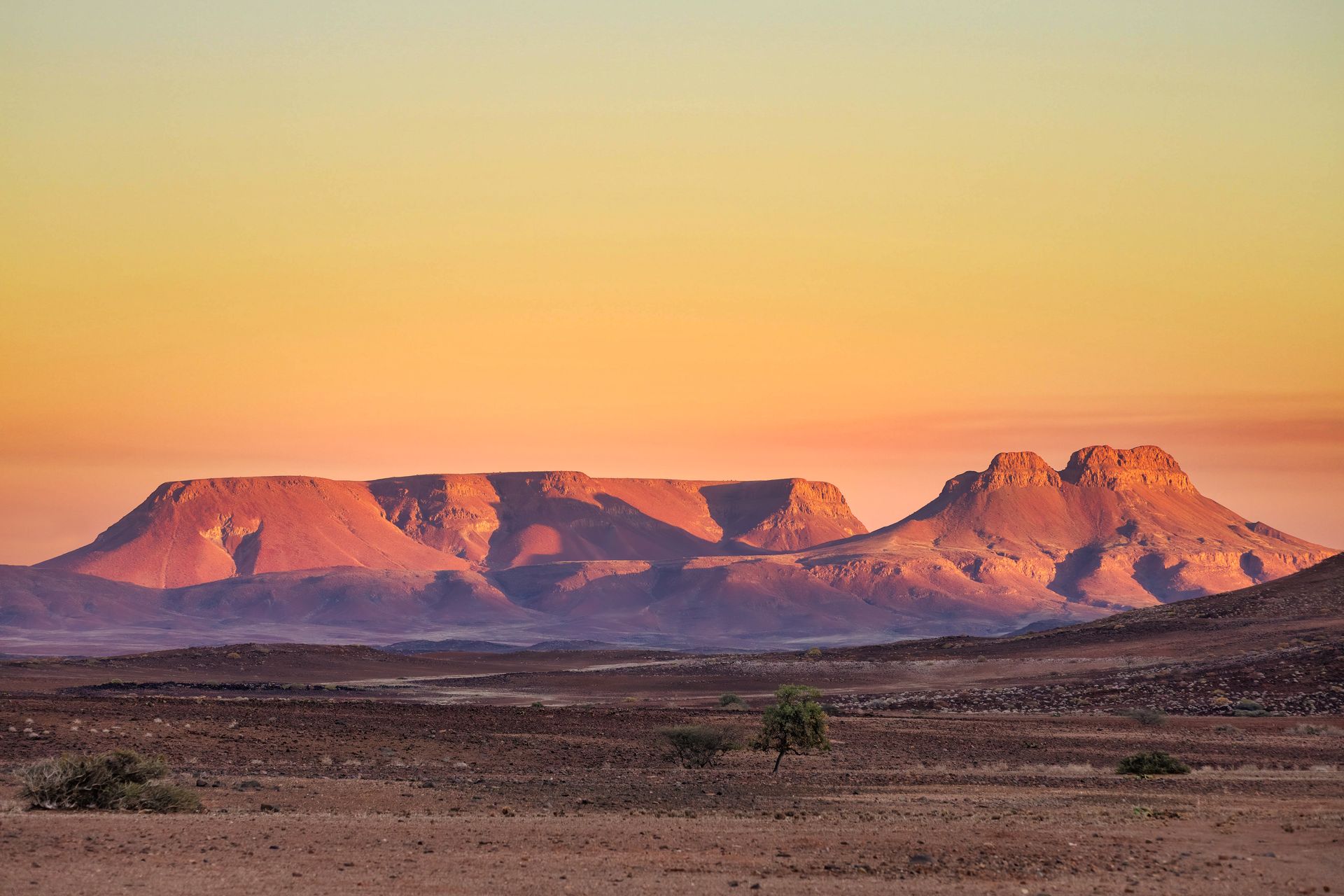
North-west of Etosha, the landscape shifts into something that feels less like a destination and more like a geological argument with time itself. Damaraland is a region of ancient volcanic rock and wide gravel plains where the mountains turn purple at dusk and the dry riverbeds hold the only water for hundreds of kilometres, and it wears its age with a particular, unhurried authority.
The Brandberg, Namibia's highest mountain, rises from the plains with the abruptness of something that has no interest in gradual transitions, its granite massif reaching 2,573m and sheltering within its ravines the famous White Lady rock painting, a San artwork of extraordinary delicacy and disputed interpretation that has been drawing researchers and travellers here for decades. Then there's the smaller, but nonetheless spectacular Spitzkoppe that dominates an otherwordly landscape of dramatic rock and stone.
At Twyfelfontein, the sandstone rock faces carry more than 2,500 individual petroglyphs, made over approximately 6,000 years by San people who read this landscape with an intimacy that the modern world has largely forgotten how to achieve. UNESCO recognised Twyfelfontein as Namibia's first World Heritage Site in 2007, and it remains one of the most quietly humbling places on the continent.
A few kilometres away, the Organ Pipes present an entirely different kind of wonder: a formation of dolerite columns, some reaching 4m in height, created around 120-million years ago when magma forced its way through cracks in the earth and cooled into these extraordinary geometric structures, standing in tight parallel rows like something designed rather than formed.
Through all of this, the desert-adapted wildlife of the region moves with the particular economy of creatures that have learned to take nothing for granted. Elephant with larger feet and a capacity for surviving on minimal water cover vast distances between water sources in riverbeds that appear, to the uninitiated eye, to be completely dry. Desert-adapted black rhino, present here in the largest free-roaming population in the world, pick their way through the rocky terrain with a sure-footedness that belies their size.
The Skeleton Coast: where the desert meets a merciless sea
The Skeleton Coast takes its name from the whale and seal bones that once littered its beaches, left by the whaling industry that operated along this stretch of the Atlantic in the 18th and 19th centuries, and from the bleached remains of the ships that the Benguela Current and the notorious fogs of the South Atlantic drove onto its shores with such regularity that the San people who lived here called it the Land God Made in Anger.
It is a place of raw, almost confrontational beauty, where the cold grey ocean meets the orange desert in a collision of elements that produces landscapes of savage and unforgettable drama.
The northern Skeleton Coast, accessible only by fly-in safari and protected within a national park of extraordinary remoteness, is one of the last true wilderness areas in southern Africa. Brown hyena pick through the kelp at the water's edge. Desert lion, a population studied by researchers for decades and now slowly recovering in numbers, move between the coast and the interior on ancient routes that predate any human presence in the area. The seal colonies at Cape Cross, where up to 200,000 Cape fur seals haul out onto the rocks in a cacophony of noise and movement and smell that assaults every sense simultaneously, are one of Africa's great wildlife spectacles and one of its most genuinely overwhelming.
Kunene and the Kaokoveld: the last great wilderness
In the far north-west of Namibia, bordering Angola along the Kunene River, the Kaokoveld is the kind of place that travel writers have been running out of superlatives for since the first of them found their way here. It is vast, remote, spectacularly beautiful and almost entirely devoid of tourist infrastructure, which is simultaneously its greatest challenge and its most compelling attribute.
The Himba people, semi-nomadic pastoralists who have inhabited this landscape for centuries and who continue to live largely according to their traditional customs, move through the Kaokoveld with a knowledge of its water sources and its seasonal rhythms that represents one of the most sophisticated relationships between any human community and its environment anywhere in Africa.
The landscapes here have a quality that is difficult to categorise: part desert, part mountain, part river valley, with the Kunene cutting through deep gorges in the basalt and the late afternoon light doing things to the rock that make even the most photographically indifferent traveller reach instinctively for a camera.
Epupa Falls, where the Kunene drops in a series of cascades through a gorge lined with makalani palms, is one of the most beautiful places in Namibia, which in a country of this visual richness is saying something considerable. This is wilderness travel in its most authentic form, and it asks something of the traveller in return for what it gives.
Swakopmund: the town that shouldn't work but absolutely does
On the Atlantic coast, where the cold Benguela Current keeps temperatures moderate even in the height of summer and a permanent sea fog rolls in from the ocean most mornings, the colonial town of Swakopmund sits between the desert and the sea with the slightly improbable air of a German spa town that has been transported to Africa and decided it rather likes it here. The architecture is genuinely extraordinary, elaborate Wilhelmine buildings in pastel colours lining streets that could belong to a small Bavarian town if it weren't for the dunes pressing in from the east and the seals barking from the jetty and the particular quality of the light that gives everything a slightly dreamlike clarity.
Swakopmund is also the adventure capital of Namibia, and the range of activities available from its streets, sandboarding on the dunes, quad biking, dolphin cruises, kayaking with seals, skydiving over the desert, is matched by an excellent restaurant scene and some of the finest seafood on the continent. As a midpoint in a Namibia itinerary, or as a destination in its own right for travellers who want their safari to include more than game drives, it earns its place on the itinerary without any difficulty.
Planning your Namibia journey with Ubon Safari
Namibia rewards careful planning and punishes the itinerary that tries to cover too much in too little time. The distances are enormous, the experiences genuinely varied and the temptation to add just one more destination is one that most first-time visitors succumb to, arriving home slightly exhausted and resolving to come back and do it more slowly.
Umang and Beena have been building Namibia journeys for long enough to know exactly how to pace them, which combinations of destinations work beautifully together and which connections consume more time than they're worth, and how to build an itinerary that leaves the traveller feeling that they've seen Namibia rather than driven through it.
If the country has been on your mind, the conversation starts with a call or a message. Namibia has been waiting, in its ancient, unhurried way, for precisely as long as it takes.